INDEX
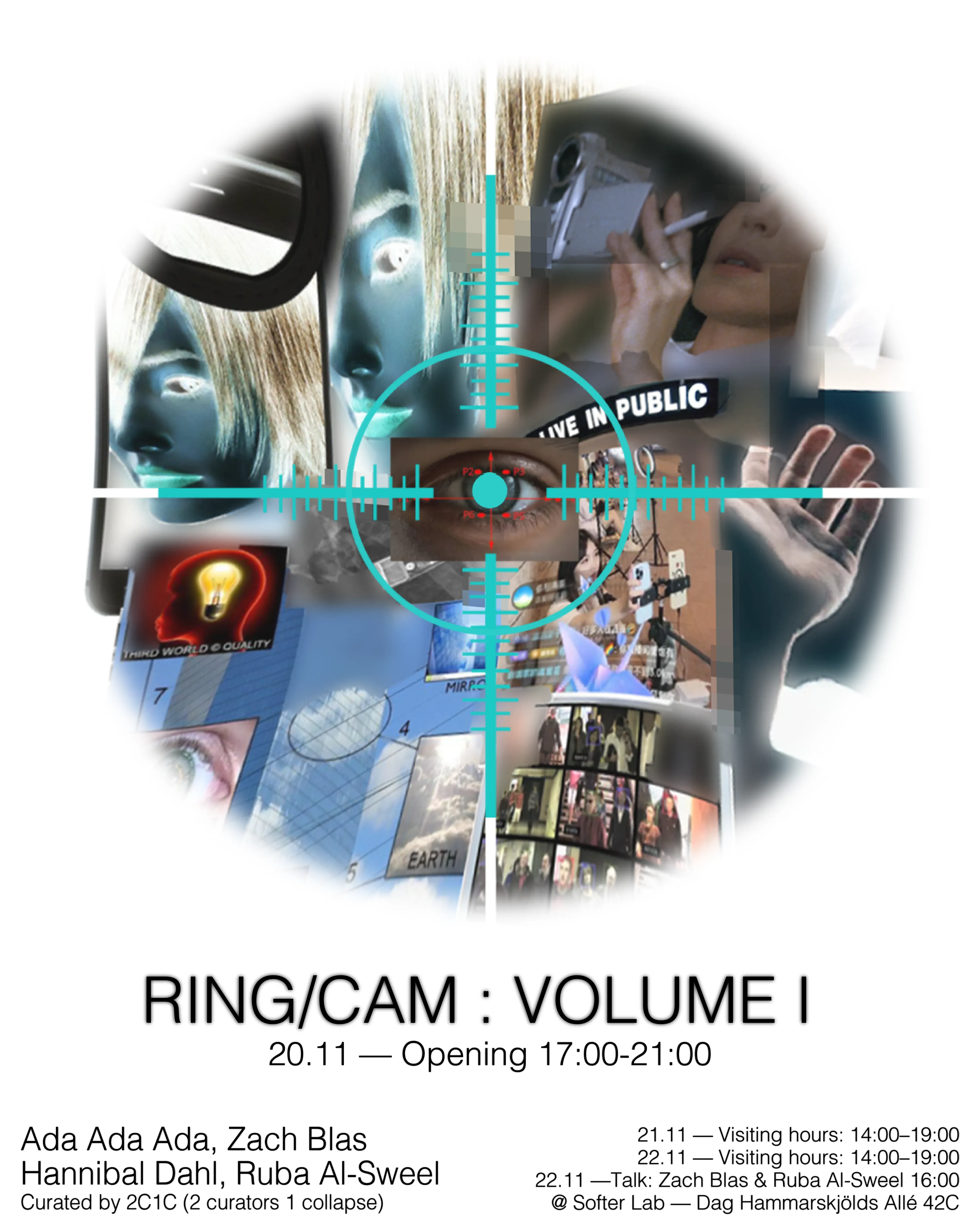
RING/CAM : VOLUME I

Have you ever woken up with crusty eyes,
to the dim glow of a screen
—blurred, looping, endless?
2025. A quarter of a century since the promised crash of the year 2000.
We thought everything would be different.
For a while, it even felt that way.
The discovery of the Net.
That new intimacy with the machine
—cybernetic, playful, and strangely tender.
We shared fragments of ourselves: a thought, a selfie, a small confession into the void.
The latest iPhone, the latest Macintosh
—each update a ritual, each trend a prophecy of progress.
Twenty-five years later, we’ve woken up to a static state. A déjà vu humming through the feed.
This insistent desire to dominate territory, data, desire itself.
Are we looping the last century? Why do tech CEOs now govern like fascists?
“The smartphone is the rosary of the solitary believer in the religion of self.” says Byung-Chul Han.
Is there a collective memory of subjugation, ecological ruin, and political erasure encoded in our DNA?
And why does it all feel simulated—except it’s not?
Or perhaps it is, and we’re the simulation’s ghosts.
As the first quarter of the 21st century nears its close, the contours of daily life are increasingly sculpted by techno-feudal forces: hyper-surveillance, predictive algorithms, and a relentless demand for performative visibility.
RING/CAM calls on contemporary performance and new media artists to interrogate, disrupt, and reimagine the entanglements between technology and society-where the body, the lens, and the feed intersect. Rooted in the observation of a growing artistic impulse to challenge, subvert, and reimagine systems of control and visibility, this initiative investigates the paradoxes of presence and perception. It explores the political potential of opacity, concealment, and disobedience as strategies of resistance within both digital and physical realms.
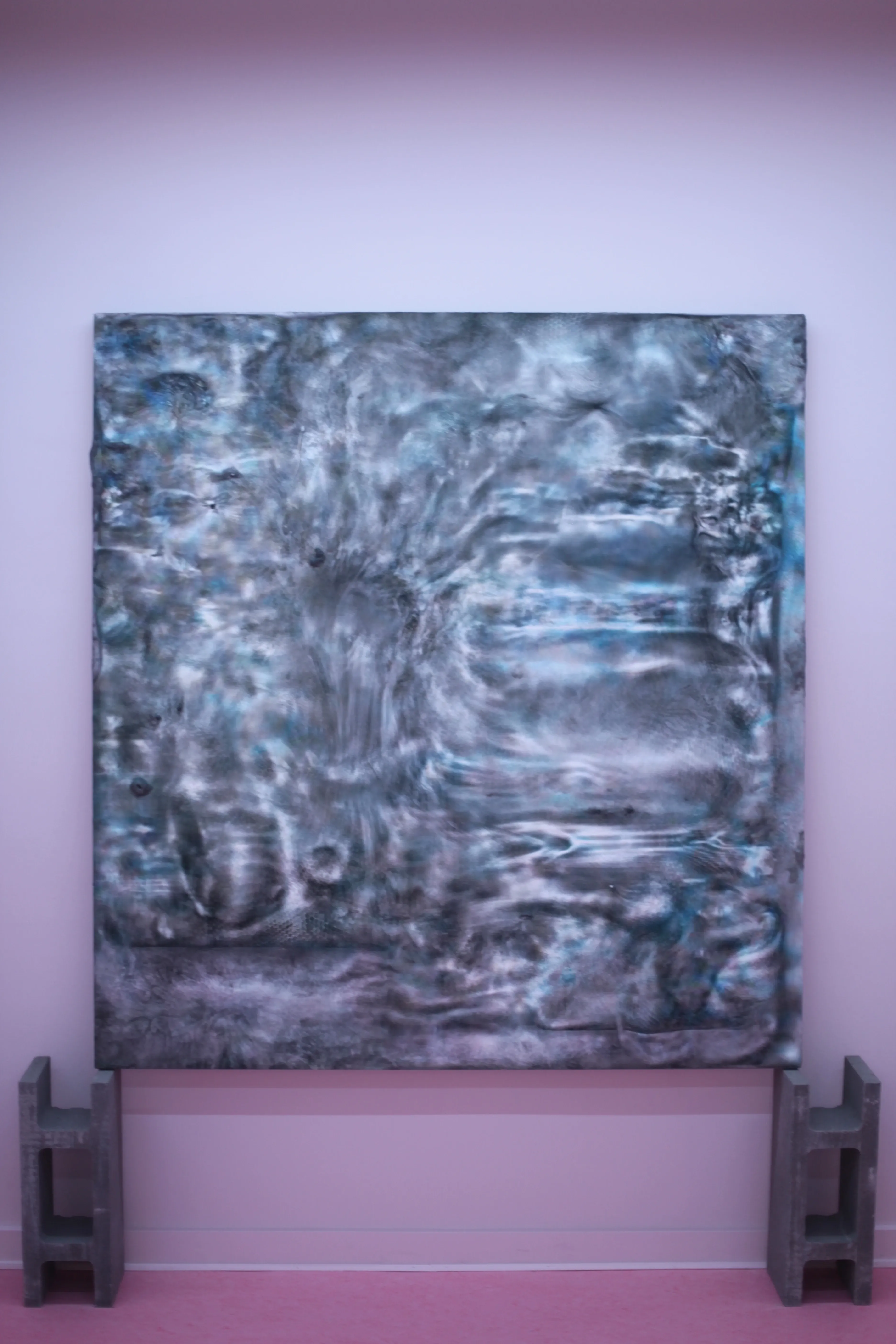
@Exhibition view of Orbit I by Hannibal Dalh. Courtesy of 2C1C.
RING/CAM refers to the ring light and camera setups that rose to prominence during the pandemic and the surge of platforms like TikTok and its use by gen z and gen alpha.
These ubiquitous devices -readily available in mainstream retail stores- signal the banalisation of performative technology. Often mass-produced in the Global South by low-wage laborers, they encapsulate the act of self-staging and evoke Baudrillard theories, where appearances are indistinguishable from reality, and Michel Foucault’s concept of the panopticon, which implies constant visibility and self-surveillance-while also drawing attention to the often-overlooked dynamics of invisible labor.
Yet the “ring” carries a deeper symbolic resonance. It conjures the image of an endless loop, a luminous circle reminiscent of the halos in Raphaelite paintings. In this context, the halo becomes a portal for spiritual contemplation, reframing the camera not merely as an instrument of surveillance or vanity, but as a gateway to mystical, cyber-spiritual experiences.
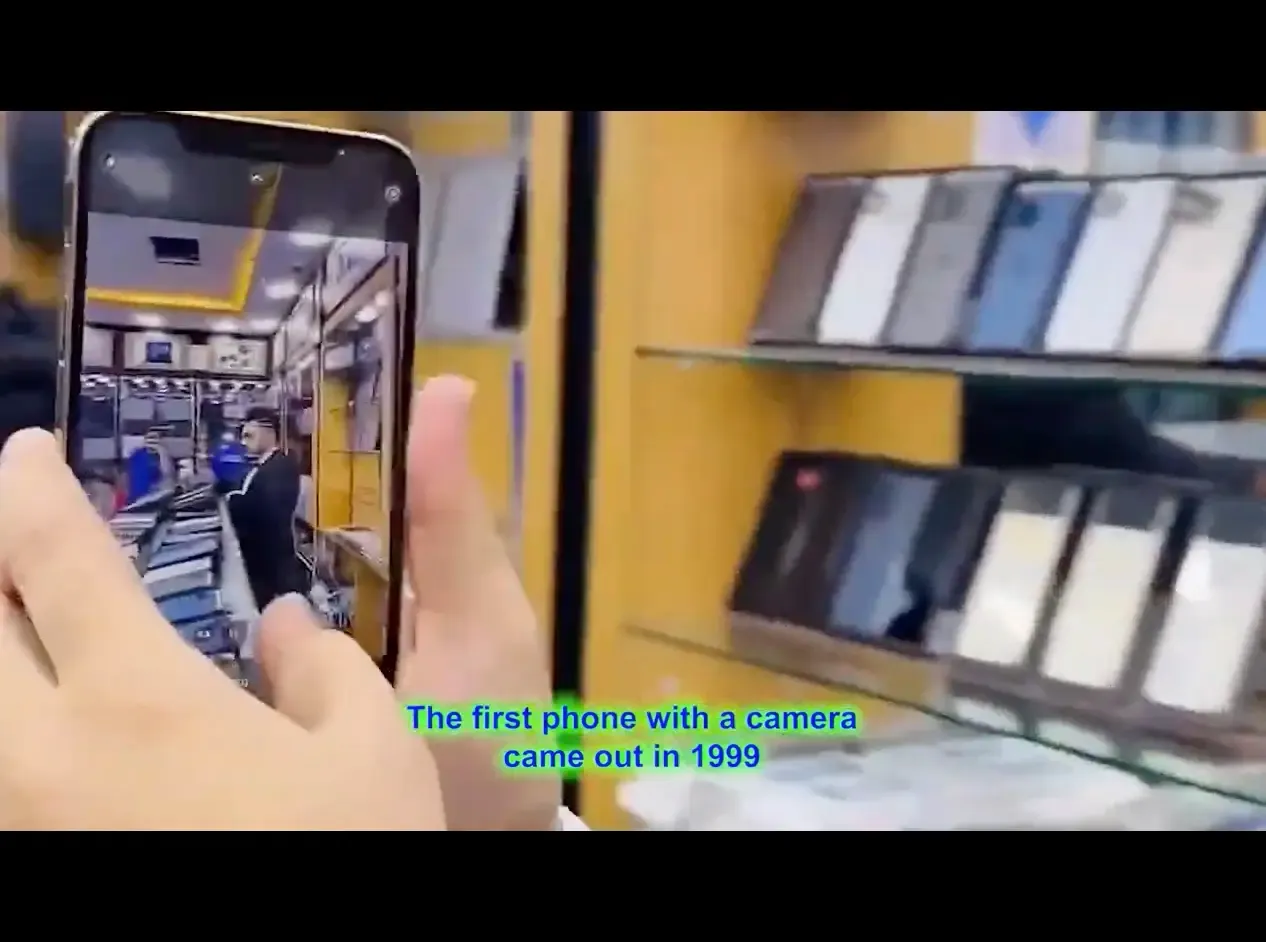
@Still from First Phone by Ruba Al Sweel
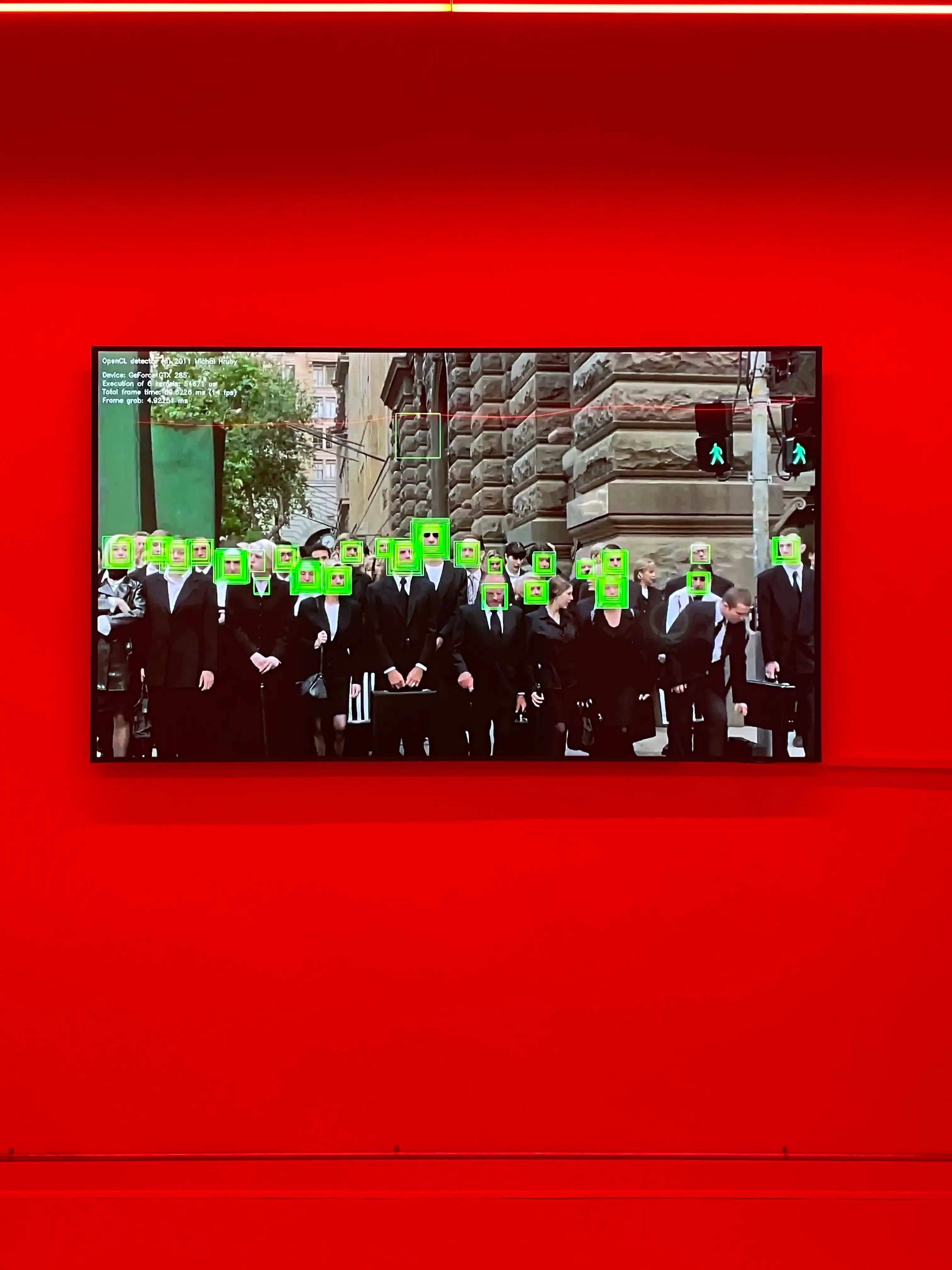
Engaging with visibility and control, the project shifts from representation to acts of interference and embodied ambiguity. Through sousveillance, the gaze is reclaimed against the Leviathan. The works allow roots for multiplicity and self-defined presence. This multisite initiative takes over the city to not only present works about veillance but invite visitors into an unstable environment within it, where bodies flicker between presence and absence, identity becomes aesthetic camouflage, and defiance is enacted through both enactment, ambivalence and refusal. In a city that thrives on marketed openness, design, and digital transparency, RING/CAM emerges as a counter-site: temporary zones of resistance.
Practical Information
Exhibition dates: 20–22 November 2025
Venue: Softer Lab, Østerbro, Copenhagen
Artist talk (hybrid in-person/online): 22 November at 16:00 (CEST), with Ruba Al-Sweel and Zach Blas
Visual direction: Anna Gunvor
Supported by: Østerbro Lokaludvalg and Carlsberg
Participating Artists
Ada Ada Ada (DK)
Ada Ada Ada is an algorithmic artist and writer whose practice explores how gender, queerness, and embodiment are mediated by computation. Working across performance, generative art, video, and writing, she examines how algorithms shape identity and visibility. A former programmer and interaction designer, she co-founded the interactive art studio Circuit Circus and has exhibited widely in Copenhagen, New York, Paris, Berlin, and beyond.
Zach Blas (USA)
Zach Blas is an artist, filmmaker, and writer whose work investigates the politics and ideologies embedded in computational technologies. Through moving image, installation, and performance, he examines how digital systems influence subjectivity and futurity. Blas has exhibited internationally at the Vienna Secession, LACMA, Walker Art Center, ZKM, and the 12th Gwangju Biennale. His monograph Unknown Ideals was published by Sternberg Press (2021). He holds a PhD from Duke University and teaches Visual Studies at the University of Toronto.
Hannibal Dahl (DK)
Hannibal Dahl graduated from the Royal Danish Academy of Fine Arts in 2025. His work investigates technological acceleration and its effects on human perception, presence, and intimacy. Spanning digital imaging, video, sculpture, and sound, his practice explores how machine-mediated environments restructure experiences of time, space, and embodiment, and how alienation might become a site of reflection.
Ruba Al-Sweel (UAE)
Ruba Al-Sweel is an artist and writer working across publishing, curation, and networked media.
Rooted in media theory and critical writing, her practice examines the aesthetics and politics of
online communication. Her texts appear in Brooklyn Rail, ArtAsiaPacific, DAZED, and DAMN
Magazine. She has curated projects in Dubai, Berlin, Paris, Jeddah, and online, and holds an MA
in Media and Creative Industries from Sciences Po, Paris.
2 curators 1 collapse is a curatorial collective examining capitalism’s effects on ecological and
technological systems.
It is composed of Joachim Aagaard Friis and Elia-Rosa Guirous-Amasse.
Instagram: @2curators1collapse